UGC for Restaurants, Creator Platforms and What They Cost
Published October 5, 2026
Hiring UGC creators yourself? Brief them here and your card is charged only after you approve the footage.
For a restaurant, UGC costs the creator's fee plus a comped meal plus whatever the platform charges on top, and the platform part ranges from about $150 to $450 a month for ten videos. Most US food creators quote $75 to $300 per short video. The cheapest route is direct hiring on a free plan with a 10% fee; the one that keeps ten locations on one brief is a monthly marketplace plan. Restaurants have one constraint product brands do not: the creator has to come to you.
This guide is for a US restaurant group, franchise marketer or multi-location operator who runs Meta, TikTok or Google ads and needs fresh creator video every month. It prices the platforms that can actually put a local creator at your table, says which ones only work for packaged food, and shows where our own marketplace is and is not the right pick. Prices were read off each platform's own pricing page in September and October 2026.
How much does restaurant UGC cost?
A single restaurant UGC video usually costs $75 to $300 in creator fees, plus the meal you comp, plus platform overhead of 0% to 15% of the fee and sometimes a subscription. Ten videos a month at $150 each comes to $1,500 for the creators, roughly $300 to $600 in food at cost, and $150 to $450 for the platform.
The food line is the one operators forget. A creator filming a tasting menu or a four-person table shot needs four plates, a drink and dessert on camera, which is real product cost at your food margin. Put it in the brief as a fixed comp ("up to $80 of menu items, at cost to the house") so every creator gets the same deal and nobody negotiates at the host stand.
Usage rights are the other variable. A video posted only on the creator's own TikTok is the cheapest thing you can buy. A file you run as a paid ad for a year across every location is worth more, and creators know it. Our guide to whitelisting and paid usage rights costs shows the 50% to 100% premium that paid-ad rights commonly add when they are bought separately.
Which UGC platforms work for restaurants?
The ones that let you hire by location. Most UGC platforms are built around shipping a product to a creator's home, which works for a hot sauce or a frozen pizza and does nothing for a dining room. Here is how the main options handle the visit, with prices from their own pages.
| Platform | How the creator gets the food | Published price | Restaurant fit |
|---|---|---|---|
| Collabstr | Search by city, hire a local creator from their profile | Free plan with a 10% fee; Pro $299/mo; Premium $399/mo at 5% | Strong for one-off local hires; campaigns cost $299+ |
| JoinBrands | Built around shipped products and TikTok Shop | Pay as you go at 15%; Start-up $99/mo at 12%; Pro $299 at 10% | Good for a packaged line, weaker for dine-in |
| Influee | Creators apply to your campaign; global pool | $229/mo for 10 creators plus 10% fee | Fine if a few US creators near you apply |
| Hummingbirds | Local everyday creators, aimed at retail and CPG | Not published | Built for local, priced by quote |
| Billo, Clip, Trend | Product shipped to the creator | Per video, from $99 (Billo) or $124 (Clip) | Packaged food and meal kits only |
| UGCcreators | Filter creators by location, invite them to one brief | Starter $49/mo at 10%; Plus $149 at 7%; Pro $499 at 5% | One brief across many locations; smaller pool |
The full plan breakdowns are on our Collabstr review and pricing page, the JoinBrands pricing page and the Influee reviews and pricing page, each with the spend level where one plan overtakes another.
What is the cheapest way for a restaurant to get UGC?
For one location buying a few videos a quarter, Collabstr's free plan is the cheapest: you pay the creator's package price plus 10% and nothing else. Below about $5,000 a month of creator spend, no subscription undercuts it on fees, ours included. A subscription pays off through workflow: one brief, campaigns creators apply to, reshoots set by plan.
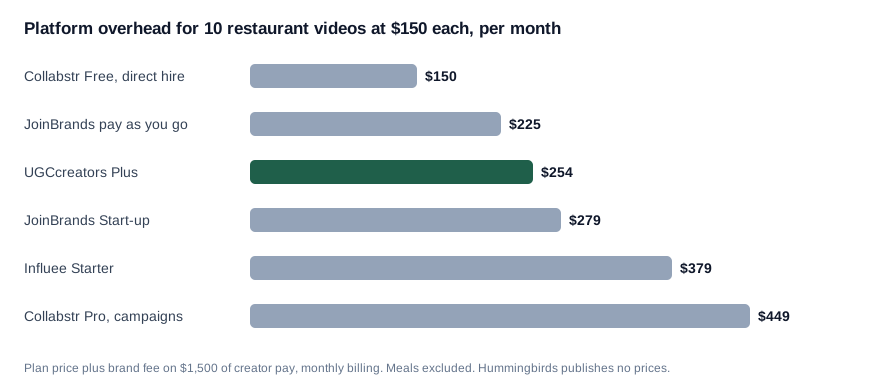
That changes with volume and locations. Ten videos a month at $150 each costs $150 in fees on Collabstr Free, but you are hiring ten creators one profile at a time with ten different package terms. Moving to Collabstr Pro for campaigns costs $449 in overhead for the same month. On our Plus plan it is $149 plus a 7% fee, $254, with one brief all ten creators film against. JoinBrands pay as you go comes in at $225, cheaper than us, if its creators can reach you.
Do restaurants pay UGC creators with free food?
Some do, and it works for a small creator posting to their own feed. It does not work for ad content. A creator who hands you a file you can run as a paid ad for months wants a cash fee, and the better ones will not shoot for a meal alone. Budget cash for anything going into ads, and treat the meal as a production cost.
Barter also leaves you with no leverage on the brief. If you are not paying, you cannot ask for a reshoot when the lighting is bad or the dish arrives cold. On our marketplace the fee sits in escrow: your card is authorized when you hire and charged only after you approve the video, and every plan includes at least one reshoot.
What should a restaurant UGC brief include?
A brief that works for ten creators at five locations has to remove every decision a server or manager would otherwise make on the spot. These are the fields we see restaurant marketers get wrong most often.
- Shot list by priority. The hero dish arriving, the cheese pull or pour, a first-bite reaction, the room at peak, the exterior with signage. Five shots, ranked, so a creator who runs out of light still gets the first three.
- Visit window. Specific days and times, ideally just before service when the kitchen can plate for camera without slowing tickets.
- Comp limit. A dollar cap on menu items and who on site approves it.
- Claims to avoid. No "best in town" unless you can back it up, no health claims about a dish, and allergens stated correctly if the creator mentions them.
- Alcohol. If drinks appear, the creator must be 21 or older, and the Beer Institute and Distilled Spirits Council ad codes ask that anyone shown drinking appear to be 25 or older. Meta and TikTok also restrict who sees alcohol ads.
- Disclosure. If the creator posts on their own account, the FTC expects a clear paid-partnership label, even when the payment was only food.
- Usage rights. Which channels, how long, and whether you can run the clip as a paid ad or a Spark Ad from the creator's handle.
On our marketplace those last three are fields in the brief, so they are settled before anyone books a table rather than argued about after the video is delivered.
How do restaurant groups run UGC across several locations?
One brief, many creators, a location per creator. The mistake multi-unit operators make is letting each general manager hire their own local creator with their own terms, which gives you ten videos that cannot be compared and ten different rights deals. Write the brief once at the brand level, invite one or two creators near each location, and judge the deliveries side by side.
Once the clips are approved, use them past social. A restaurant group with menu boards and lobby screens can loop the same short videos in every dining room with digital signage software, which gets more value out of a file you already paid for. For the paid side, rotate new hooks every two to three weeks; food ads fatigue fast because the audience is local and sees them often.
If you also sell a packaged line, such as sauces, frozen meals or merchandise through grocery, that part of the program behaves like any consumer product, and our guide to UGC platforms for CPG brands prices it.
Where UGCcreators fits, and where it does not
We are a marketplace where a brand writes one brief, invites creators by name and pays through escrow. For a restaurant group that means filtering the catalog by city, inviting creators near each location to the same brief, and paying only for videos you approve. The plans and fees are on the UGC pricing page.
Plainly, where we are weaker: our catalog is new and much smaller than Collabstr's, so in a smaller US city you may not find a creator near you yet, and a platform with millions of profiles will fill faster. Hummingbirds is purpose-built for local creators if you are happy to buy on a quote. And if you buy two videos a quarter, a free plan with a 10% fee costs less than any subscription.
Is UGC worth it for restaurants?
Yes, for any restaurant already spending on paid social. Creator video of real people eating the food is what local ads need, and a $150 clip that runs for six weeks costs less than a single afternoon with a production crew. It is not worth it as a substitute for food quality or service; UGC amplifies a good dining room and exposes a bad one.
The practical test: if you will spend at least a few hundred dollars a month promoting the restaurant online, buy ten creator videos, run them for a month, and keep the three that beat your current ads. Browse creators and their rates before you commit to any plan.