UGC for Travel Brands and Hotels with Creator Platform Prices
Published October 6, 2026
Hiring UGC creators yourself? Brief them here and your card is charged only after you approve the footage.
UGC for travel brands costs the creator's fee, plus either a shipped product or a comped stay, plus $200 to $700 a month in platform overhead for ten videos. US travel creators commonly quote $150 to $400 for a short vertical video, and on-location work sits at the top of that range because the creator spends a day getting to you. Luggage, gear and travel apps can buy UGC like any product brand. Hotels, resorts, tour operators and attractions cannot, because the creator has to show up.
This guide is for a US travel marketer with a paid-social budget: a hotel group or independent resort, a tour or experience operator, a luggage or travel-gear brand, or a destination marketing team that needs fresh creator video every month for Meta, TikTok and YouTube Shorts ads. It prices the platforms you can actually buy through today, says which ones only work if you ship a product, and shows where our own marketplace is and is not the right pick. Platform prices were read off each vendor's own pricing page in September and October 2026.

How much does UGC cost for a travel brand?
A single travel UGC video usually costs $150 to $400 in creator fees, plus the product or stay you provide, plus 0% to 15% in platform fees and sometimes a monthly plan. Ten videos a month at $200 each comes to $2,000 for creators and roughly $200 to $700 for the platform, before the cost of the stay.
The stay is the line item that decides your real price. A gear brand ships a $90 duffel and is done. A hotel gives away a night, breakfast, maybe a spa slot, and the cost of that depends entirely on when it happens. A room that would have sat empty on a Tuesday in February costs you housekeeping and amenities. The same room on a sold-out Saturday in July costs you the rate you turned away. Brief creator stays for low-occupancy nights and the comp becomes your cheapest input.
Put the comp in the brief as a fixed package ("one night, standard king, breakfast for two, Sunday to Thursday only") so every creator gets the same deal. If you run a small property, block those creator nights in your inn and B&B property management system the moment the brief goes out, so a comped room never collides with a paying booking.
Which UGC platforms work for hotels and travel brands?
Any platform works for a product you can put in a box. For a property or an experience, you need one that lets you hire by location or invite a named creator who already lives near you or travels to you. Here is how the main options handle it, with the prices on their own pages.
| Platform | How the creator gets the product or stay | Published price | Travel fit |
|---|---|---|---|
| Collabstr | Search creators by city and niche, hire one from their profile | Free plan with a 10% brand fee; Pro about $299/mo; Premium about $399/mo at 5% | Strong for one-off local hires near a property. Creators also pay 15% on their side |
| UGCcreators | One brief, filter by location, invite creators by name, escrow on approval | Starter $49/mo at 10% (3 hires); Plus $149 at 7% (10 hires); Pro $499 at 5% | Built for a monthly program across several properties or products on one spec |
| JoinBrands | Campaign brief, creators apply; mostly shipped products | $0 at 15%; $99 at 12%; $299 at 10%; $499 at 8% | Good for luggage and gear, weaker for on-site stays |
| Influee | Campaign brief, creators apply; lists a travel creator niche | $229, $529 or $999/mo plus 10% | Good when each creator delivers several videos from one stay |
| Insense | Campaign brief, creators apply; shipped products | Brand plan $500/mo billed $1,500 a quarter, 10% fee | Gear and apps; quarterly billing is heavy for a seasonal property |
| Billo | You ship the product, Billo matches a creator | From $99 per video | Luggage and accessories only. No way to send a creator to a property |
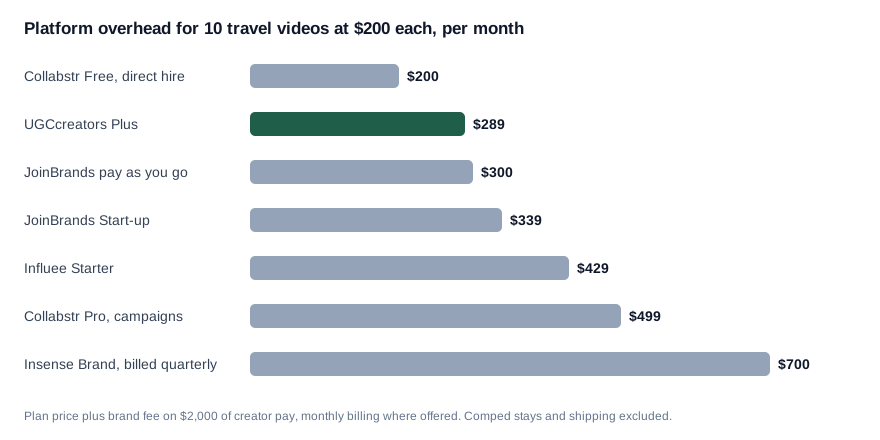
On pure overhead at $2,000 a month of creator pay, the free Collabstr plan is cheapest at $200, and we are second at $289 on Plus. That gap is real and we would rather say it. What the $89 buys is one written brief that every creator films against, a location filter, reshoots set by plan instead of negotiated per creator, and payment captured only after you approve the footage. If your program is one creator a quarter, the free plan is the better deal. If it is ten videos a month across three properties, the brief is what keeps the deliveries comparable. The full plan table, fees and reshoot counts are on our UGC creator pricing page.
Is UGC worth it for hotels?
Yes, when it feeds paid ads. A hotel buys creator video because a phone-shot room tour, check-in or pool morning looks like a guest's post, and that is the format that runs natively on TikTok, Reels and Shorts. A professional property shoot still wins for the booking engine and the brochure. UGC wins on volume, seasonality and testing several hooks a month.
The math that makes it work is cost per tested hook. A brand shoot that costs thousands gives you one look for a year. Ten creator videos a month at $200 each give you ten hooks to put behind $50 a day of spend, kill the losers in a week and scale the one that books. That is a job for a performance marketer, not a brand team, and it is the buyer this guide is written for.
What should a travel UGC brief include?
A travel brief needs everything a product brief needs, plus the logistics of getting a creator on site and the legal pieces that come with filming in public and around guests. Write these into the brief before anyone books a flight:
- The comp package and dates. Exactly what is included (room type, meals, activities), which nights, and what the creator pays for themselves, such as travel and incidentals.
- The shot list by hook. Arrival and first reaction, the room reveal, one signature experience, and a closing "why I'd book again" line. Give each hook a length so edits are comparable.
- Guests on camera. Anyone identifiable in an ad needs a signed release. Easier rule: no other guests' faces, shoot common areas early in the morning.
- Drone footage. Commercial drone flights in the US need an FAA Part 107 remote pilot certificate. Ask for it, or leave drone shots out of the brief.
- Disclosure. If the creator posts on their own account, the FTC expects a clear paid-partnership or #ad disclosure, comped stays included.
- Usage rights. Organic only, or paid ads for how long and on which channels. Our guide to UGC whitelisting and paid usage rights costs shows the premium that paid-ad rights commonly add when they are bought separately.
- Claims to avoid. No "best hotel in Miami" or price promises the rate desk cannot honor. Stick to what the creator actually experienced.
How do you find travel UGC creators near your property?
Search by location first and niche second. A creator who lives two hours away can shoot on a weeknight with no flight to pay for, and their audience often includes people within driving distance, which is your weekend-getaway market. Filter the catalog by state or city, read each creator's rate and past travel or lifestyle work, then invite three to five to the same brief. On a marketplace where creators apply, post the brief with the location in the title and a clear comp, or you will get applicants from across the country asking you to cover airfare.
For gear and luggage, location does not matter, so pick on style and audience. A carry-on brand wants frequent flyers filming in real airports. A packing-cube brand wants the overhead packing shot. A travel app wants the screen recording plus a face, which is closer to app UGC than travel UGC. Our priced guide to UGC for apps covers that case.
How many travel UGC videos do you need a month?
Most US travel brands running paid social need 6 to 12 new creator videos a month to keep ads fresh. Below six, you cannot test enough hooks to find a winner each month. Above twelve, a single property usually runs out of distinct angles unless it rotates seasons, room types or experiences.
A practical starting point for a hotel: three creators a month, each delivering a room tour, an experience clip and a short testimonial, so nine videos from three comped nights. For a gear brand with no stay to give: eight to ten creators, one video each, shipped product, so you see ten different faces and settings. That is where a monthly plan with a hire allowance beats paying per video.
Where we are not the right pick
Honesty saves you a wasted month. We are a newer marketplace and our creator catalog is smaller than Collabstr's or JoinBrands', so a property in a small market may find more local creators elsewhere today. If you want creators to post on their own accounts for reach rather than deliver files for your ads, an influencer platform built around posting fits better. And if you need a full production team on site with lighting and a director, that is an agency job; our UGC agency alternative page prints what agencies charge so you can compare.
Where we fit: a travel brand or hotel group with a paid-social budget, a monthly need for 3 to 30 videos, and a team that wants one brief, named creators, rights settled before filming and payment held until the video is approved. Brands weighing a license-based platform for a bigger influencer program can run the same annual math on our Aspire UGC pricing breakdown.